Hormone TherapyClinical Practice
Hair Regrowth That Works: PRP, Peptides, and Profitable Protocols for Your Practice
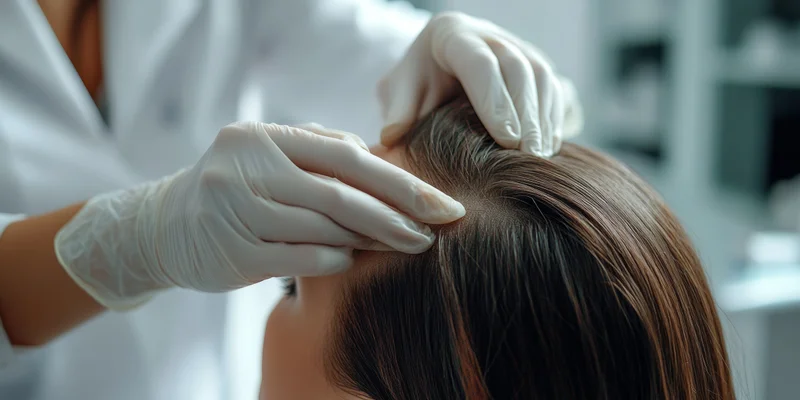
Why Hair Loss Is a Growing Concern—and Opportunity
Hair thinning and scalp issues are no longer just cosmetic concerns—they’re among the top reasons patients seek out aesthetic and regenerative care [1]. By offering effective, evidence-based hair restoration solutions like topical therapies and Platelet-Rich Plasma (PRP), clinics can serve a massive, underserved market while creating recurring revenue streams.
When delivered in a comprehensive protocol, PRP and growth factor topicals can slow shedding, stimulate new growth, and improve scalp health—without the need for surgery or long-term pharmaceuticals [2].
How Clinics Can Offer Scalp & Hair Regrowth Services
- Use PRP Injections into the Scalp – Stimulate dormant follicles and increase circulation.
- Apply Growth Factor Topicals – Support scalp microbiome and improve follicular health.
- Add Red Light Therapy (LLLT) – Enhance blood flow and reduce inflammation.
- Include Nutritional & Hormonal Testing – Rule out internal causes (thyroid, iron, hormones).
- Create 3–6 Month Protocols – Offer bundled programs for long-term consistency and results.
Top Therapies for Hair Regrowth & Scalp Health
- PRP (Platelet-Rich Plasma) – Uses the patient’s own platelets to promote growth factor release and follicle stimulation [2] [3].
- Exosome Scalp Serums – Advanced regenerative topicals to activate dormant follicles [4].
- Peptide-Based Topicals (e.g., GHK-Cu, PTD-DBM) – Support hair anchoring, shaft strength, and dermal papilla regeneration [5] [6].
- Minoxidil Alternatives – New formulations that work without shedding or irritation [7] [8].
- Biotin, Zinc & DHT Blocker Supplements – Supportive add-ons for internal optimization [9] [10].
PRP & Topicals for Hair Regrowth
PRP for Hair Regrowth:
- Hair Density and Shedding: PRP injections have been shown to improve hair density and reduce shedding after multiple sessions. Studies indicate a significant increase in hair thickness and count, making it a promising treatment for androgenic alopecia [2] [3].
- Safety and Efficacy: PRP is biocompatible and low-risk, using the patient's own blood components to stimulate hair growth. Clinical trials have demonstrated its effectiveness in both men and women with androgenic alopecia.
- Peptides and Exosomes: Topical peptides and exosomes have been found to improve follicular activity and hair thickness. These advanced regenerative topicals support hair anchoring and dermal papilla regeneration, enhancing overall scalp health [4].
- Minoxidil Alternatives: New formulations aim to provide similar benefits without the side effects associated with traditional minoxidil, such as shedding or irritation [7] [8].
- Scalp Circulation and Regrowth: LLLT has been shown to improve scalp circulation and support hair regrowth in androgenic alopecia. It enhances blood flow and reduces inflammation, making it a complementary treatment to PRP and topicals [11].
What to Expect When Offering Hair Regrowth Services
- High ROI Protocols: Scalp programs can range from $1,500–$4,000+ for 3–6 sessions.
- Repeatable Revenue: Maintenance sessions and topical refills drive recurring income.
- Strong Patient Satisfaction: Especially when results are documented via photos and scans.
- Men & Women Seek These Services: Market to postpartum women, men 30–60, and patients with thyroid/autoimmune conditions.
Implementation Tips for Clinics Adding Hair Regrowth Treatments
Getting Started
- Use FDA-cleared PRP kits and injectables – Ensure compliance and safety.
- Offer Scalp Analysis Tools – Use photography, dermoscopy, or trichoscopy to track results.
- Train Staff in Injection Techniques – Consistent depth and spacing are key to success.
- Highlight Real Patient Stories – Use social proof and before/after visuals.
- Create Signature Programs – “Hair Restoration Bootcamp” or “Root Revival Protocol” branding.
- Bundle with Other Aesthetic Services – Especially facial anti-aging, hormones, or gut health.
- Series Packages – Sell in bundles of 3–6 treatments with optional topicals.
- Membership Tie-In – Include scalp maintenance in ongoing beauty/wellness memberships.
- Retail Opportunity – Carry physician-grade hair growth topicals and shampoos.
FAQs for Clinics Offering Hair Regrowth & Scalp Health Services
Is PRP safe and natural?
Yes—it uses the patient’s own blood with no foreign substances, making it biocompatible and low-risk [12].
How soon do patients see results?
Hair growth typically starts after 8–12 weeks, with peak results around 4–6 months.
Who is an ideal candidate?
Best for patients with early to moderate hair thinning, including androgenic alopecia, postpartum shedding, and autoimmune scalp issues.
Can it be used with other hair loss medications?
Yes—PRP and topicals are complementary to Finasteride, Minoxidil, and Red Light Therapy.
References
- Nestor MS, Ablon G, Gade A, Han H, Fischer DL. Treatment options for androgenetic alopecia: Efficacy, side effects, compliance, financial considerations, and ethics. J Cosmet Dermatol. 2021;20(12):3759-3781.
- Li M, Qu K, Lei Q, Chen M, Bian D. Effectiveness of Platelet-Rich Plasma in the Treatment of Androgenic Alopecia: A Meta-Analysis. Aesthetic Plast Surg. 2024 Mar;48(5):977-984.
- Conde Montero E, Fernández Santos ME, Suárez Fernández R. Platelet-rich plasma: applications in dermatology. Actas Dermosifiliogr. 2015.
- Gupta AK, Wang T, Rapaport JA. Systematic review of exosome treatment in hair restoration: Preliminary evidence, safety, and future directions. J Cosmet Dermatol. 2023;22(9):2424-2433.
- Parikh AK, Tan IJ, Wolfe SM, Cohen BA. Advances in Topical Therapies for Clinically Relevant and Prevalent Forms of Alopecia. Life (Basel). 2024;14(12):1577.
- Lee WJ, Sim HB, Jang YH, Lee SJ, Kim do W, Yim SH. Efficacy of a Complex of 5-Aminolevulinic Acid and Glycyl-Histidyl-Lysine Peptide on Hair Growth. Ann Dermatol. 2016;28(4):438-43.
- Mehta A, Motavaf M, Raza D, McLure AJ, Osei-Opare KD, Bordone LA, Gru AA. Revolutionary Approaches to Hair Regrowth: Follicle Neogenesis, Wnt/ß-Catenin Signaling, and Emerging Therapies. Cells. 2025;14(11):779.
- Gupta AK, Talukder M, Venkataraman M, Bamimore MA. Minoxidil: a comprehensive review. J Dermatolog Treat. 2022;33(4):1896-1906.
- Rosenthal A, Conde G, Greco JF, Gharavi NM. Management of androgenic alopecia: a systematic review of the literature. J Cosmet Laser Ther. 2024;26(1-4):1-16.
- Almohanna HM, Ahmed AA, Tsatalis JP, Tosti A. The Role of Vitamins and Minerals in Hair Loss: A Review. Dermatol Ther (Heidelb);9(1):51-70.
- Avci P et al. Low-Level Laser Therapy for Treatment of Hair Loss. Lasers Surg Med. 2014;46(2):144–151.
- Alves R, Grimalt R. Randomized Placebo-Controlled, Double-Blind Study of PRP in Androgenetic Alopecia. Dermatol Surg. 2016;42(4):491–497.
Last Updated: 12/15/2025 | Professional Healthcare Education